
Oct 16, 2023
Top 5 Sustainable Practices in the Cement Industry
Understanding Cement Grades: Which Is Best for Your Project?
Cement is the cornerstone of construction, the hidden hero behind the structures that define our cities, homes, and infrastructure. But not all cement is created equal, and choosing the right grade for your project can make a difference.
Types of Cements and Their Uses
In India, two primary types are widely favored for home construction: Ordinary Portland Cement (OPC) and Portland Pozzolana Cement (PPC). The Bureau of Indian Standards (BIS) has categorized these cements based on their applications:
Ordinary Portland Cement (OPC)
OPC is a versatile cement type with three grades, each determined by its compressive strength.
â— OPC 33: With a compressive strength of 33MPa after 28 days, it's suitable for various construction purposes, especially masonry and plastering.
â— OPC 43: Boasting a compressive strength 43MPa, OPC 43 is used for high-strength concrete projects.
â— OPC 53: This robust cement grade offers a compressive strength of 53MPa and is commonly employed in demanding construction projects like precast concrete, prestressed concrete, bridges, and tall buildings.
Portland Pozzolana Cement (PPC)
PPC is a blend of Portland cement clinker or ordinary Portland cement, pozzolana, and optionally gypsum. It's versatile and suitable for various construction areas. Key applications include masonry mortars, plastering, decorative and art structures, manufacturing of precast sewage pipes, and challenging concrete conditions where durability is paramount.
PPC is further classified into two categories:
â— PPC Fly Ash-Based: The fly ash component should make up between 15% and 35% of the mass of PPC.
â— PPC Calcined Clay-Based: The total pozzolana content should be between 10% and 25% of the mass of PPC.
Grades of Cement
Here are the six cement grades that are widely used in construction:
OPC – Grade 33
OPC 33-grade cement is synonymous with regular Portland 33-grade cement. The number 33 denotes the cement's compressive strength, which, when tested after 28 days, should exceed 28 N/mm.
OPC 33-grade cement is not recommended for concrete mixes of higher grades (above M20). It's best suited for projects where extreme strength is not a primary requirement. However, due to advancements in cement technology, OPC 33 is less commonly used today, as higher-grade options are readily available.
OPC – Grade 43
OPC cement grade 43 offers a compressive strength of 43 N/mm after 28 days of curing. This grade is manufactured by numerous cement producers and is suitable for preparing precast concrete components, fence posts, and similar applications. It's often recommended for projects requiring a balance between strength and lower setting time.
Like OPC grade 33, grade 43 is used less frequently in some areas, as OPC grade 53 is more readily accessible in the market.
OPC – Grade 53
OPC cement grade 53 is the most popular in construction. It's ideal for many projects, including bridges, roads, dams, buildings, water tanks, and tunnels. OPC 53 indicates a compressive strength of 53 N/mm, meeting the stringent Indian standard.
For all types of structures, from houses to high-rises, OPC cement grade 53 is the go-to choice. However, it's essential to remember that selecting the right cement grade is only part of the equation. The cement brand also plays a crucial role in ensuring the quality of your construction project.
Conclusion
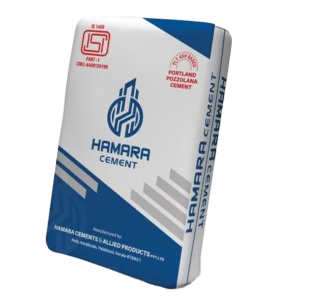
When selecting the right cement grade for your project, consider the specific requirements of your construction. Compressive strength, setting time, and durability are critical in choosing. But don't forget to choose a reputable brand like Hamara Cement to ensure the quality and integrity of your construction.
So, when it comes to your next construction project, remember: It's not just about building with cement; it's about building with the right cement, the Hamara Cement.
Oct 16, 2023
Top 5 Sustainable Practices in the Cement Industry

0 Comments